 +919979891672




Every May in Ahmedabad, the same thing happens. The heat arrives, the dust picks up, and thousands of people start waking up with a blocked nose, itchy eyes, and a head that feels like it is full of cotton. Some assume it is a summer cold. Others reach for a painkiller and push through.
But for a large number of people, what they are actually dealing with is a seasonal allergy — and without the right nasal allergy relief, it just keeps coming back, summer after summer. Understanding why it happens and what genuinely helps is the first step toward actually breathing easier this season.
Summer Allergies Are Back — Here Is What Causes Them and How to Find Nasal Allergy Relief
Why do my allergies get worse in summer in Ahmedabad?
Ahmedabad summers are not easy on the respiratory system. Between April and June, pollen from certain grasses and flowering trees peaks in the air. At the same time, the city is affected by dry, hot winds that carry construction dust, industrial particles, and vehicle exhaust. Your immune system does not distinguish between harmful threats and harmless pollen — it just reacts. And when you breathe in high concentrations of allergens every single day, that reaction becomes relentless.
There is also the indoor factor. People seal their homes and run air conditioning continuously during summer. Dust mites, mold spores, and pet dander concentrate inside poorly ventilated rooms. So while you are trying to escape the outdoor heat, you end up breathing a smaller, more contained cocktail of indoor allergens all day long.
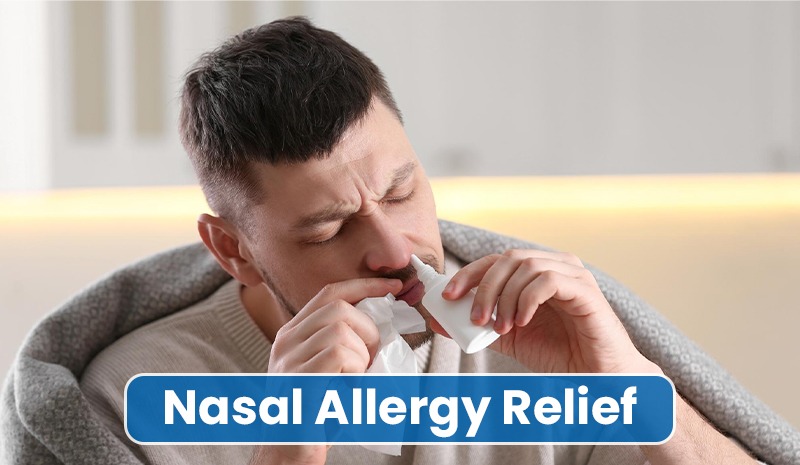
What causes nasal congestion during the summer months?
Nasal congestion during summer is the nose doing exactly what it is supposed to do — just doing it too aggressively. When an allergen enters the nasal passage, the immune system releases histamine. Histamine causes the blood vessels inside the nose to swell, increases mucus production, and results in that familiar blocked, heavy feeling.
In summer, specifically, the combination of high pollen count, dry air, and increased dust load means the nose is constantly reacting. People who have no allergy history in winter often develop congestion in summer purely because the allergen load crosses a threshold their immune system can no longer ignore quietly. The nose is not broken — it is overworked.
How can I get nasal allergy relief fast at home?
A few things actually work — and a few things people rely on do not help as much as expected.
Saline nasal rinses are one of the most underrated tools available. A simple salt water rinse, done once or twice daily, physically flushes pollen, dust, and irritants out of the nasal passage before the immune response gets triggered. It is not glamorous, but it genuinely reduces congestion.
Keeping windows closed during peak pollen hours — typically early morning — and using an air purifier indoors cuts down on the allergen load significantly. If you use air conditioning, clean the filters regularly. Dirty filters recirculate exactly the particles you are trying to avoid.
Antihistamines help manage symptoms once they have started. But they treat the reaction, not the cause. If you find yourself taking them every day through summer, that is a signal worth paying attention to.
Does air pollution make summer allergies worse?
Yes — and the research on this has become quite clear. Air pollution does not just cause its own irritation to the respiratory tract. It actively amplifies how the body reacts to allergens.
Fine particulate matter, known as PM2.5, penetrates deep into the nasal passages and airways. It damages the protective lining of the respiratory tract, making it easier for pollen and other allergens to penetrate and trigger a stronger immune response. People who live near high-traffic roads or industrial areas in Ahmedabad consistently report more severe allergy symptoms than those in lower-pollution zones.
The pollution effects on the nose go beyond irritation — they change how sensitive the nasal tissue is over time. Even a mild allergy can behave like a severe one when the surrounding air quality is consistently poor.
What is the connection between AQI, sinus problems, and nasal allergies?
The Air Quality Index is a number, but it translates into a very physical experience for people with nasal allergies or sinus issues. When the AQI crosses 150 in Ahmedabad — which happens regularly during summer dust storms and heat waves — the concentration of PM2.5, PM10, and ozone reaches levels that overwhelm the nose’s natural filtering ability.
At those AQI health risk levels, the nasal mucosa stays in a constant state of low-grade inflammation. This is what people describe as “always feeling stuffy” or “never fully clearing up.” The AQI sinus connection is direct: poor air quality prolongs allergy episodes, prevents the nasal lining from recovering between exposures, and turns seasonal congestion into something that lasts for months rather than weeks.
When should I see a doctor for summer nasal congestion?
Most people wait far too long before coming in. A blocked nose for two or three days is one thing. But if congestion has lasted more than ten days, if you are getting frequent headaches behind the eyes, if you notice facial pressure that worsens when you bend forward, or if you have started breathing primarily through your mouth — these are signs that something more than a mild allergy is happening.
Recurring sinus infections, nasal polyps, and deviated septums can all present as “just bad summer allergies.” Without a proper examination, these go undiagnosed and untreated for years while the person keeps buying antihistamines that address none of the actual problem.
If your symptoms follow you from summer to summer and never fully resolve, please do not keep guessing. One proper evaluation changes everything.
What is the best treatment for summer allergies and nasal congestion?
The most effective treatment is one that addresses your specific allergen triggers — not a generic protocol.
Allergy testing identifies exactly what your immune system is reacting to. Once that is known, treatment can be targeted. Antihistamines and nasal corticosteroid sprays manage symptoms well when used correctly. Immunotherapy — allergy shots or sublingual drops — desensitises the immune system over time and can reduce allergy severity long-term. This is the closest thing to actually treating the root cause rather than the symptoms.
For people whose congestion is worsened by structural issues like a deviated septum or nasal polyps, a minor procedure can make a dramatic difference in breathing quality. No amount of medication fully compensates for a structural problem that needs correction.
You deserve to breathe properly — every season
Summer should not mean three months of waking up with a blocked nose, skipping outdoor plans, and running through antihistamines. If that has become your pattern, it is worth getting a clear answer about why.
Dr Manish Goyal offers comprehensive allergy evaluation and treatment in Ahmedabad — from diagnostic testing to personalised treatment plans that go beyond managing symptoms. Whether your problem is seasonal or year-round, the goal is the same: lasting nasal allergy relief, not temporary patches.
Book a consultation today and go into this summer with a plan.
📍 Dr Manish Goyal, Ahmedabad, Gujarat

No Comments