 +919979891672




Many people see snoring as an innocent habit. However, when a person has frequent nighttime noises, they may have larger issues, like sleep apnea. If a person’s snoring interferes with their quality of sleep or makes them tired during the day, then doctors will usually recommend that the patient undergo a sleep study. The purpose of this test is to detect the number of times that the patient stops breathing, the extent of the drop in oxygen levels, and whether or not there may be a sleep disorder present that could not have been discovered through the regular method of examining patients. An early diagnosis will enable the proper treatment to be implemented, thus allowing the patient to enjoy long-term good health.
Sleep Study for Snoring: Why Polysomnography Matters
A Sleep Study for Snoring Evaluates Breathing and Sleep Patterns
Snoring-related sleep studies measure how your body behaves while sleeping and determine the amount of air that flows through your lungs, the effort you put forth while breathing, the amount of oxygen in your bloodstream during sleep, and the phases of sleep.
An obstructed airway will create resistance to airflow or snoring at night, while an overnight observational test will allow further evaluation to see whether the resistance causes pauses in breathing, which may be harmful to a person.
By having an objective measurement of all the parts of a night’s sleep, doctors can pinpoint the real cause of sleeping problems, and disrupted sleep will no longer be classified as simply snoring.
Doctors Recommend Sleep Study Testing When Snoring Becomes Persistent
If you only snore a few nights when you have a cold, there is probably no need for testing. However, if you are consistently snoring regularly and have been doing this for several months, it is good to see a physician to determine whether further testing is needed.
Physicians will usually recommend testing if the snoring meets one of the following criteria:
- Occurs regularly
- Worsens over time
- Disturbs sleep quality
- Appears with breathing pauses
Using a sleep study can help to prevent undiagnosed conditions or the reasons why you snore. Early diagnosis is beneficial for creating better outcomes in the years to come.
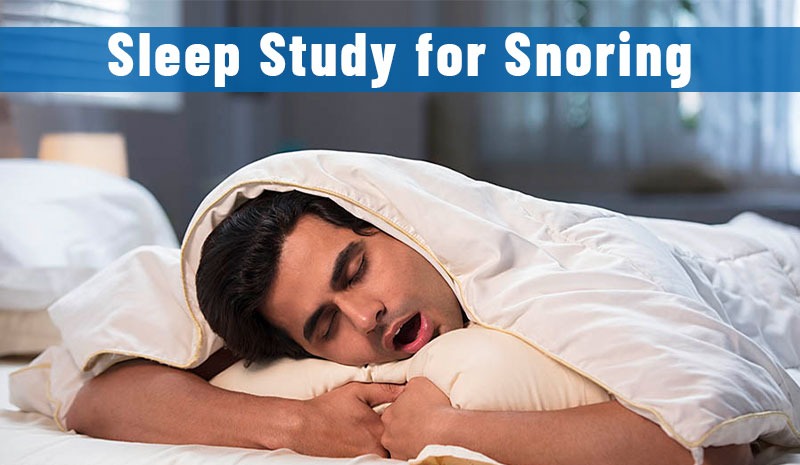
Sleep Study Testing Identifies Sleep Apnea and Airway Obstruction
Sleep apnea is a disorder in which interruptions in breathing occur during sleep. These interruptions decrease the oxygen levels in the body and place extra stress on the body.
A polysomnography test helps to identify:
- • Obstructive sleep apnea
- • Central sleep apnea
- • Mixed breathing disorders
An evaluation of snoring as part of a polysomnography study establishes the severity of the condition. Accurate diagnosis of sleep apnea will help prevent complications such as hypertension and heart-related problems.
Specific Symptoms Indicate the Need for a Sleep Study for Snoring
In some cases, specific symptoms point to a potential sleep disorder. If these symptoms are present, then a sleep study will be required to assess the patient for any possible sleep-disordered breathing.
There are many potential signs of sleep-disordered breathing, including:
- Consistent, loud snoring
- Episodes of gasping and/or choking while sleeping
- Feeling excessively sleepy during the day
- Headaches in the morning
- Difficulty concentrating
- Mood changes and/or irritability
In addition, children may experience hyperactivity and/or learning-related difficulties. Early diagnosis of sleep-disordered breathing in children can help with proper growth and development.
Polysomnography Testing Records Body Functions During Sleep
Polysomnography is the gold standard for diagnosing sleep disorders, as it records many bodily functions at once.
The Key Measurements of a Polysomnography include;
- Brain activity
- Eye movement
- Muscle activity
- Heart rate
- Breathing rate
- Blood oxygen saturation
Polysomnography is the best method available to evaluate overall sleep health and allows for the most accurate diagnosis.
A Sleep Study Follows a Structured and Patient-Safe Process
The test can occur in either a professional (sleep lab) or home-based environment. Sleep studies are safe and do not involve any pain to the patient.
The sleep study usually consists of:
- Sensor placement on the body
- Overnight sleep monitoring
- Continuous data recording
- Expert analysis by sleep specialists
Patients will be able to sleep as they typically do while undergoing a sleep study, and trained technicians will help maintain the patient’s comfort during the night.
Sleep Study Results Guide Accurate Snoring Treatment Decisions
A sleep study will help your doctor determine a tailored approach for treatment, depending on the severity of your condition and the reason(s) behind it.
- Lifestyle modifications
- Continuous positive airway pressure therapy
- Oral appliances
- ENT surgical evaluation
- Weight management guidance
To help your Doctor evaluate Snoring, avoid Treatment for Conditions that are not the reason for snoring. Getting appropriate treatment for snoring will improve your sleep quality and your overall health.

No Comments