 +919979891672




If you are aiming for less invasive surgery with Endoscopic Thyroid Surgery in Ahmedabad, you have made a wise first step to put your health and confidence back in track. Thyroid surgical operation with a huge scar in the neck and a prolonged recovery period is history. With the up-to-date endoscopic and reconstructive procedures, you can get world-class treatment at a reputable centre in Ahmedabad. Dr Manish Goyal, guiding you at Aashwi ENT Hospital, the thyroid and facial nerve or facial palsy reconstruction surgical team will be there to assist you. The district is a home for most advanced and patient-friendly treatments, be implanting thyroid or being suffering from facial palsy and requiring reconstructive ENT surgery. We can discuss how these surgeries function, how one can select the right physician, and what makes Ahmedabad the hub for advanced thyroid and facial reconstructive ENT care.
Endoscopic Thyroid Surgery in Ahmedabad – A Modern Approach to Thyroid & Facial Reconstructive Care
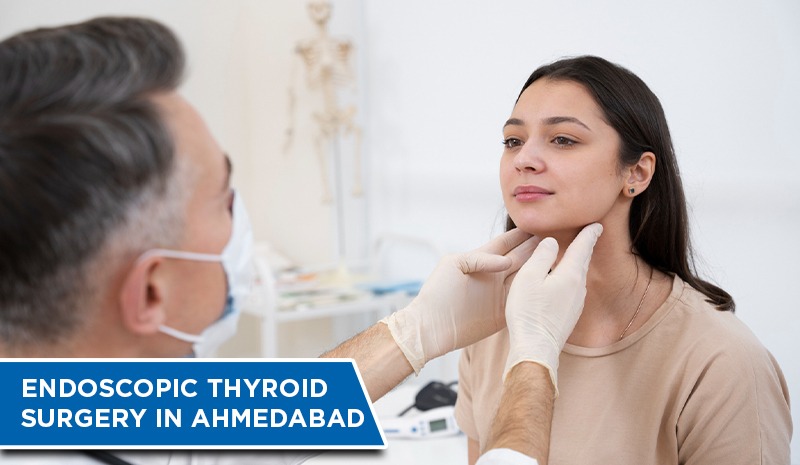
What is Endoscopic Thyroid Surgery, and how does it differ from traditional thyroidectomy?
This method makes use of endoscopic tools and a camera to facilitate the removal of all or part of the thyroid gland through small incisions. The main objective is to achieve less scarring, quicker healing, plus a less traumatised region around the gland compared to an open thyroidectomy.
Traditional thyroid surgery can be more invasive with a bigger neck incision, more muscle detachment, and longer post-operation recovery time.
One of the pioneering devices used in the operation at Aashwi ENT Hospital is Dr. Manish Goyal, who performs “Endoscopic Thyroid surgeries” as one of his areas of expertise, sharing a list of procedures like facilitating the minimally invasive camera-assisted technique.
Who is a Reconstructive ENT Surgeon, and why does facial & throat reconstruction matter?
A “reconstructive ENT surgeon” is an otolaryngologist who, apart from regular ear-nose-throat scenarios, can proficiently operate in the complex field that involves restoring the physical and functional aspects of the head, neck, face, and throat. His skill set might include, among others, the ability for Facial nerve repair, facial palsy surgery, post-traumatic/cancer reconstructive surgery, and minimally invasive advanced thyroid or throat surgeries.
The aim of surgical reconstruction in the case of facial palsy or facial nerve weakness is not only to regain the symmetrical movement, to enhance the visual aspect, and to safeguard the functional (such as swallowing, speech or eye closure) but also these accomplished ENT surgeons may do “endoscopic throat surgery” (for voice box or laryngeal issues) and have the reconstructive skill as well.
Dr Manish Goyal, at his clinic, mentions “Surgeries for facial palsy” and “Endoscopic Thyroid surgeries” among his areas of proficiency, meaning you can get a surgeon who is competent both in the traditional and the reconstructive aspects of head & neck care.
Why choose Ahmedabad for Endoscopic Thyroid and Facial Reconstructive Surgeries?
There are quite a few benefits that make Ahmedabad the right place for patients to undergo these cutting-edge operations:
- Specialist centers like Aashwi ENT Hospital, where you can find surgeons benefitting from a wealth of knowledge and experience.
- Dr. Manish Goyal is an expert in ENT and head & neck surgery and has been practicing for over 18-20 years.
- Additionally, minimally invasive procedures for the neck and voice, such as endoscopic thyroidectomy, skull base surgery, and voice surgery, are available at a single location.
- Good infrastructure, modern operating theater suites, imaging, and patient facilitation services.
Easy access and affordable treatment compared to most international hospitals.
How does the surgery work: step-by-step for endoscopic thyroid and for facial palsy or reconstructive ENT cases?
Endoscopic Thyroid Surgery (general steps):
- Pre-operative study: imaging (ultrasound/CT), blood tests, voice and nerve functions.
- Administration of anesthesia along with patient positioning.
- A small cut is made (generally under the arm, behind the ear, or in the armpit, depending on the method), and endoscopic tools are inserted.
- Exploring the thyroid gland with a camera.
- Removal of the gland along with dissection, while the most vital structures are kept intact (recurrent laryngeal nerve, parathyroids).
- Winding down the operation and keeping a check on the possible complications (hemorrhage, nerve damage).
- After surgery care: brief stay, slight pain in the area of the neck, rapid recovery of daily activities.
Facial Palsy / Reconstructive ENT Surgery (general steps):
- Physical examination before the operation: nerve function, muscle condition, and imaging.
- Decision-making: nerve grafting, muscle transfer, endoscopic release, or other techniques.
- The operation: an endoscopic or open approach, microsutures, grafts, or transfers to bring back the lost movement.
- Rehabilitation after the surgery: physiotherapy for facial motion, speech/voice therapy if the throat is affected.
- Subsequent visits: long-term checks of symmetry, function, and aesthetic result.
Combining the knowledge of both thyroid and reconstructive surgery means the surgical specialist is capable of dealing with an intricate neck region, nerves, and soft-tissue reconstructions all at once.
What are the benefits, risks, and recovery timelines?
Benefits:
- Less scar left on the neck, predominantly with endoscopic access.
- Less pain and smaller incisions.
- Quicker recovery and getting back to normal life is possible sooner. In case of reconstruction, enhanced functions (voice, swallowing, facial movement) and good cosmetic results are achieved.
Risks:
- Like all other operations: bleeding, infection, anaesthesia risk.
- On the thyroid side of things: nerve injury (voice changes), hypoparathyroidism (low calcium), and incomplete removal (in some cases).
- On the other hand, the reconstructive/nerve work risks may include: residual weakness, asymmetry, and the necessity of further procedures.
Recovery timeline (typical):
- Most patients are discharged within 1-2 days, they can engage in light activities within a week, and their normal routine can be resumed in 2-3 weeks (working condition dependent).
- Facial reconstructive surgery is very different for each case; typically, there is initial healing in a few days; however, full functional recovery may take weeks to months during therapy.

No Comments