 +919979891672



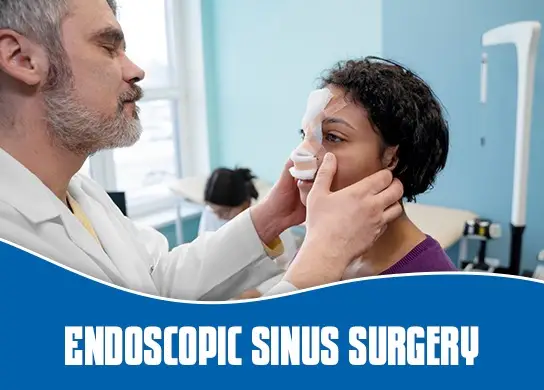
Breathing should be comfortable and easy without any struggle. People with chronic sinus problems, however, may find their daily congestion very tiring. When medicines become ineffective, medical practitioners usually advise Endoscopic Sinus Surgery. This minimally invasive ENT surgery aids in the restoration of normal sinus drainage without the need for external incisions. Knowing its advantages and the healing period enlightens patients about the best way of getting permanent relief from their sinus condition.
Endoscopic Sinus Surgery: Benefits & Recovery
Sinus problems may cause difficulty in breathing, sleeping, and even affect one’s daily mood and general comfort. A lot of people have borne with the problem for a very long time, and yet their medication does not seem to work. Surgery becomes the only way when the inflammation is so severe that it blocks the natural drainage. Using advanced nasal endoscopy techniques, Endoscopic Sinus Surgery clears the airway, and thus, the breathing becomes normal again. Because of this method, there are no scars left on the outside of the body, and the healing time is also short.
Endoscopic sinus surgery is a modern treatment for chronic sinus blockage
With an endoscopic sinus operation, the doctor opens up the blocked passages of the sinuses through the nasal cavity. To do that, the surgeon inserts a nasal endoscope, which is a very thin tube with a camera. The tool helps find the sinus openings by giving a zoomed, in-view. In the process, the surgeon cuts off the removal of the tissue that is already inflamed or the place that is blocked with the utmost exactness.
The operation centers on the fact that the drainage system will be improved naturally. Large bone structures are not taken out. That is what makes it a minimally invasive ENT surgery. The majority of the tissues that are left are normal and untouched.
Chronic sinusitis is the main reason patients need sinus surgery
Chronic sinusitis is a condition that lasts for more than twelve weeks. The symptoms keep coming even though medication is used. These symptoms are facial pressure, nasal blockage, headaches, and thick discharge.
The persistent inflammation narrows the openings of the sinuses. So the trapped mucus creates pressure and the risk of infection. Antibiotics and sprays cannot always reverse the damage. In such situations, the only option is Endoscopic Sinus operative treatment.
Endoscopic sinus surgery offers several advantages over traditional methods
There are a few advantages of endoscopic sinus surgical intervention over the traditional method.
It used to be that traditional sinus surgery required cuts on the outside of the face and took a long time to heal. Completely changed this approach by modern techniques.
The major benefits are:
- No visible scars
- Less tissue damage
- Improved sinus ventilation
- Reduced bleeding risk
- Shorter recovery time
Patients can resume their normal activities earlier in most cases. The time spent in the hospital is usually short. These benefits are the reasons why ESS is the most chosen option nowadays.
The ESS procedure uses nasal endoscopy for precise sinus treatment
The ESS method is carried out with the help of a nasal endoscope to ensure an accurate sinus treatment
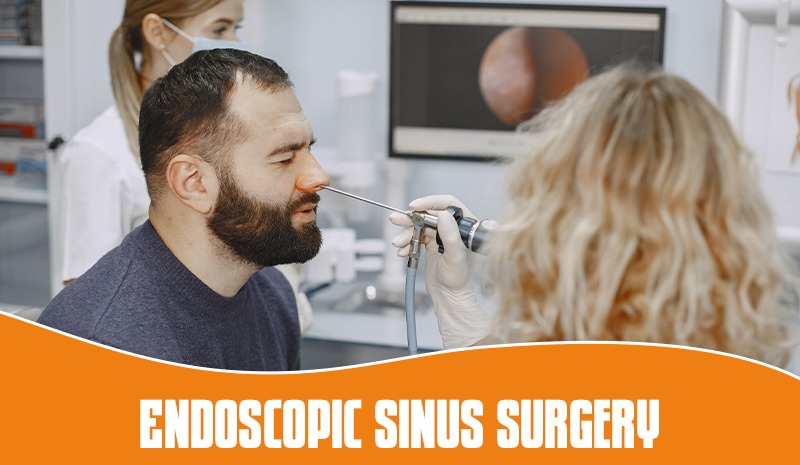
Whether local or general, anesthesia is given before starting the ESS operation. A nasal endoscope is passed by the surgeon through the nostrils. This camera shows the detailed sinus anatomy on a monitor.
Using microinstruments, it is ensured that the obstructed passages are gently enlarged. Polyps or locally inflamed tissue may be removed. The main aim stays the same. To facilitate drainage and airflow of a normal nature.
There is no need for incisions made on the exterior. The nose repairs itself internally.
Sinus surgery recovery follows a gradual and predictable timeline
Sinus surgery recovery depends on the personal body reaction of each individual. In general, patients will suffer from nasal congestion at the very beginning. Slight pain can be felt during the first week.
Recovery stages normally look like this:
- Week 1: swelling and nasal blockage
- Week 2: breathing gets better
- Weeks 3, 4: less crusting
- 6 weeks: almost complete recovery
It is common advice from doctors to do saline rinses. In this way, the nasal passages are kept clean. Healing is monitored through follow-up appointments.
Proper aftercare improves healing after endoscopic sinus surgery
Recovery after surgery is very dependent on the follow-up care that should be given to the patient. It is a must for patients to refrain from blowing their noses for a few days. Likewise, they have to put a stop to any kind of strenuous activity.
Some of the easy, to-do, and effective practices to recover are:
- Cleaning the nose with a saline solution regularly
- Resting with an elevated head position
- Keeping away from smoke and dust
- Following the doctor’s orders in taking medicine
These are the points that not only keep the infection away from the operated area but also support the healing process to be completed faster.
Endoscopic sinus operation is safe when performed by trained ENT specialists
Endoscopic sinus operation is generally very safe. Complications, although allowed, are very few and happen only in risky cases. Nowadays, the operation is performed with more accuracy due to the use of modern imaging techniques and instruments.
Impacts that are open to discussion are nasal bleeding, an infection, or temporary nasal dryness. If at all, only rare cases of serious complications are mentioned. The correct choice of patients for the procedure reduces the possibility of unwanted effects to almost zero.
An ENT examination is necessary to find out if the operation is the right option.
How minimally invasive ENT surgery improves long-term sinus health
Minimally invasive ENT surgery restores and maintains natural sinus function. It enhances airflow and lowers the chances of recurring infections. A great number of patients say they experience less frequent sinus episodes after the operation.
After drainage is restored, medication works better. The overall well-being of the patient is often noticeably elevated. Even sleep, breathing, and the sense of smell may get better.
Operation is a means to good sinus health in the future and not just a short-term solution.
When an endoscopic sinus Operation may not be necessary
Most sinus issues are not operated on. In most cases, an acute sinus infection can be cured by a course of drugs. Additionally, allergy management can significantly lower the symptoms.
- Surgeons only use surgery as a last resort in the following cases:
- Chronic sinusitis
- Recurrent infections
- Nasal polyps
- Obstruction due to structural changes

No Comments