 +919979891672



For years you have managed it. The twice-yearly sinus infections. The antibiotics that work while you take them and stop working the moment you finish. The pressure behind your eyes every morning. The blocked nose that has become so normal you have forgotten what breathing freely actually feels like.
At some point, every chronic sinusitis patient reaches the same question: is there something more than medication? For many people, the answer is yes — and that answer is endoscopic sinus surgery. Not as a last resort. Not as something frightening. As a targeted, well-established procedure that addresses the structural cause of the problem rather than managing symptoms indefinitely. Dr Manish Goyal performs this procedure regularly in Ahmedabad, and this guide explains what it involves, who genuinely needs it, and what to realistically expect.
Endoscopic Sinus Surgery: Who Needs It, What It Involves, and What to Expect
What Endoscopic Sinus Surgery Actually Does
Most people picture sinus surgery as something invasive — cuts on the face, external scarring, a long time in hospital. The reality of endoscopic sinus surgery is the opposite of that picture.
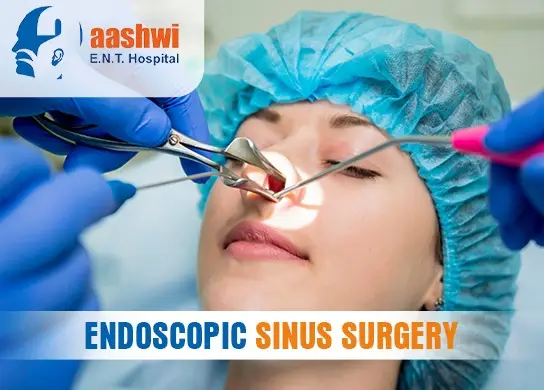
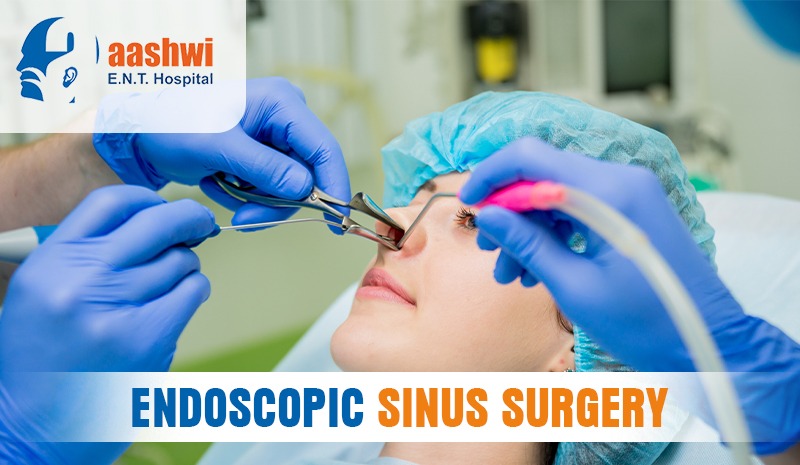
The procedure works entirely through the nostrils. A thin, rigid camera called an endoscope is passed into the nasal passage, giving the surgeon a magnified, high-definition view of the sinus openings and surrounding structures. Using fine instruments alongside the endoscope, the surgeon clears the blocked sinus drainage pathways — removing thickened tissue, polyps, or bony obstructions that are preventing the sinuses from draining naturally.
The goal is not to remove the sinuses or fundamentally alter the anatomy. It is to restore the sinuses to a state where they can function as they were designed to — draining freely, resisting infection, and staying clear without constant medical intervention. No external incisions. No visible scarring. The procedure leaves the face entirely unchanged.
FESS vs Traditional Sinus Surgery
FESS — Functional Endoscopic Sinus Surgery — is the modern standard for surgical treatment of chronic sinusitis and nasal polyps. It replaced older open sinus procedures, which required external incisions and removal of larger amounts of tissue, often with longer recovery and more complications.
The functional in FESS is deliberate. Older techniques were ablative — they removed structures. FESS is restorative — it preserves normal anatomy wherever possible and opens only what needs to be opened. This matters because it reduces the risk of scarring inside the nasal cavity, which can itself become a source of blockage if too much tissue is removed.
For patients in Ahmedabad who have been told they need sinus surgery, FESS is almost always what that means today. Traditional open approaches are now rare, reserved for complex tumour cases or revision surgery after significant previous scarring.
The Conditions That Make Surgery Necessary
Surgery is not the first step — but it becomes the right step under specific circumstances. Dr Manish Goyal recommends endoscopic sinus surgery when:
- Chronic sinusitis has not resolved after a full course of appropriate antibiotics combined with nasal corticosteroid spray, used correctly for the required duration
- CT scan confirms structural obstruction — narrowed sinus drainage pathways, bony irregularities, or anatomical variations blocking normal sinus ventilation
- Nasal polyps are large enough to block sinus drainage and have not responded adequately to steroid spray or short oral steroid courses
- Sinus infections are recurring four or more times per year, each requiring antibiotics and each affecting work, sleep, and daily function
- A deviated nasal septum is contributing to sinus obstruction and cannot be managed medically — septoplasty is performed at the same time as FESS
- Mucoceles or fungal sinusitis are present — both require surgical clearance that medication cannot provide
When Medication Should Still Come First
Surgery is never the default recommendation. The conditions that should be fully optimised before considering an operation are:
- Allergic rhinitis that is undertreated or undiagnosed — uncontrolled allergies drive ongoing mucosal inflammation regardless of surgical intervention
- Incomplete antibiotic courses — many patients who present for surgical consultation have never completed a full six-week course of appropriate antibiotics alongside intranasal steroids
- Incorrect nasal spray technique — the majority of patients use nasal corticosteroid sprays incorrectly, directing them straight back rather than toward the lateral nasal wall, reducing efficacy significantly
- Unmanaged environmental triggers — pollution exposure, occupational irritants, or untreated dust sensitivity that sustains mucosal inflammation between infections
Addressing these first sometimes eliminates the need for surgery. When surgery is still indicated after proper medical optimisation, the outcomes are consistently better because the inflammatory environment has already been brought under control.
What the Procedure Involves on the Day
Endoscopic sinus surgery is performed under general anaesthesia. The procedure typically takes between 60 and 90 minutes, though more extensive cases involving multiple sinuses take longer.
The patient arrives fasted, is reviewed pre-operatively, and goes to theatre. During the procedure, the endoscope and surgical instruments are introduced through the nostrils. The surgeon works under continuous visual guidance — nothing is done blind. Blocked sinus ostia are opened, obstructing tissue is removed, and diseased mucosal lining that will not recover is cleared while healthy tissue is preserved.
Nasal packing after FESS is now uncommon in standard cases. Most patients wake in recovery with dissolvable internal dressings rather than the gauze packing that older patients sometimes remember from previous surgeries. Discharge is usually the same day or the following morning.
Recovery — What Is Realistic
The first week involves nasal congestion — not from the procedure itself, but from normal post-operative swelling. Twice-daily saline rinses during this period are essential. They prevent crusting, remove blood-stained secretions, and help the operated sinus cavities heal cleanly.
Most patients return to desk work within five to seven days. Physical exertion, nose blowing, and any activity that increases nasal pressure should be avoided for two to three weeks. Follow-up endoscopy at one and four weeks allows Dr Manish Goyal to remove any crusting, check healing, and ensure the sinus openings remain clear during the critical early recovery window.
The nose feels odd for several weeks — different airflow patterns as the anatomy settles. By six to eight weeks, most patients notice a meaningful and sustained improvement in nasal breathing.
Long-Term Outcomes and Recurrence
FESS produces good long-term outcomes in the majority of patients with chronic sinusitis. Studies consistently show 80 to 90 percent of patients report significant symptom improvement at one year. The key word is significant — not perfect. Surgery does not cure the underlying mucosal sensitivity or allergic tendency. It removes the structural obstruction that was preventing the sinuses from managing that sensitivity.
Long-term maintenance — a daily saline rinse, a maintenance nasal steroid spray, managed allergies — is what keeps outcomes durable. Patients who follow post-operative care have substantially lower recurrence rates than those who treat surgery as a one-time fix and discontinue all further management.
Frequently Asked Questions
Is endoscopic sinus surgery painful?
Discomfort rather than pain is the more accurate description for most patients. The nose feels blocked and congested in the first week from post-operative swelling. Paracetamol manages this adequately in most cases. Significant pain after FESS is uncommon and should prompt a call to Dr Manish Goyal’s clinic.
How many sinuses are operated on?
This depends entirely on which sinuses are diseased and obstructed on the CT scan. Some patients need only one sinus opened. Others need all four pairs addressed. The procedure is planned specifically around each patient’s imaging — not a standard approach applied to everyone.
Will I need time off work?
Five to seven days off is typical for desk-based work. Manual work, lifting, or physically demanding jobs require two to three weeks away to avoid pressure changes that risk post-operative bleeding.
Does FESS affect the sense of smell?
Many patients with chronic sinusitis already have a reduced sense of smell before surgery due to mucosal thickening and polyps blocking olfactory airflow. After FESS, smell frequently improves as the nasal passage clears. Temporary worsening of smell immediately post-operatively is normal and resolves within weeks.
Can sinusitis come back after surgery?
Yes, in some patients — particularly those with underlying allergies or polyp-forming tendencies. Surgery addresses structural obstruction. It does not change the mucosal environment permanently. Ongoing management reduces but does not eliminate the possibility of recurrence.
Is FESS covered under health insurance in India?
Most standard health insurance policies cover FESS when medically indicated and supported by appropriate diagnostic documentation. Dr Manish Goyal’s clinic assists patients with pre-authorisation and documentation preparation before admission.
What is the difference between FESS and balloon sinuplasty?
Balloon sinuplasty uses an inflatable catheter to dilate sinus openings rather than removing tissue. It is suitable for mild, non-polyp cases. FESS is indicated for more complex disease involving polyps, significant anatomical obstruction, or extensive mucosal disease. Dr Manish Goyal determines which approach fits each patient’s findings at consultation.
Surgery Is Not Giving Up on Medication — It Is Giving Medication a Better Chance
Endoscopic sinus surgery does not replace ongoing management. What it does is remove the structural barrier that was preventing medication from working in the first place. Once the sinus drainage pathways are open, the nasal sprays and rinses that were fighting a losing battle finally reach the tissue they need to reach.
If you have been managing chronic sinusitis in Ahmedabad without sustained relief, the next step is a proper evaluation — imaging, endoscopy, and a clear conversation about what is actually blocking your sinuses and what will genuinely fix it.
Book your consultation with Dr Manish Goyal today.
📍 Dr Manish Goyal, ENT Specialist, Ahmedabad, Gujarat
For more information, click below:

No Comments