 +919979891672




Most parents in Ahmedabad know the city’s air is not clean. What fewer realise is what that air is doing to their child’s ears, nose, and throat — quietly, every single day. Children are not small adults when it comes to pollution exposure. Their airways are narrower, their immune systems are still developing, and they breathe more air relative to their body weight than adults do. That means every dust storm, every diesel cloud, every high-AQI morning hits a child’s ENT system harder and longer than it hits an adult’s.
Pediatric ENT care in polluted urban environments like Ahmedabad is no longer just about treating infections as they come. It is about understanding why they keep coming. Dr Manish Goyal works with families across Ahmedabad on exactly this — and this guide reflects what he sees in the clinic, week after week.
Pediatric ENT Care — What Ahmedabad Parents Need to Know
Why Children Are More Vulnerable Than Adults
A child’s nasal passage is significantly narrower than an adult’s. Even a small amount of mucosal swelling — triggered by dust, PM2.5, or allergens — can reduce airflow by a disproportionately large amount. What causes mild congestion in an adult can completely block a young child’s nasal airway.
Their Eustachian tubes — the channels connecting the middle ear to the back of the throat — sit at a flatter angle in children than in adults. This makes drainage from the middle ear more difficult, and mucus produced in response to pollution lingers longer, creating conditions where bacteria and viruses take hold quickly.
On top of this, children spend more time outdoors and closer to the ground — where particulate concentrations are highest. They breathe faster, inhale more air per kilogram of body weight, and have less protective mucosal tissue built up over years of exposure. The vulnerability is structural, not just incidental.
What Pollution Does to a Child’s Nose and Sinuses
Fine particulate matter — PM2.5 — bypasses the nose’s natural filtering system because its particles are too small to be trapped by nasal hair and mucus alone. Once inside the nasal passage, these particles deposit on the mucosal lining and trigger a low-grade inflammatory response that does not always produce obvious symptoms at first.
Over weeks and months of daily exposure, this inflammation thickens the nasal lining, narrows the sinus drainage pathways, and creates the conditions where chronic sinusitis develops. Sinus problems in children do not usually appear overnight — they build gradually until a parent notices the child has not fully breathed through their nose in months.
In Ahmedabad, where PM2.5 levels regularly exceed safe thresholds, children in high-traffic neighbourhoods and areas near construction zones carry a significantly higher inflammatory burden in their nasal tissue than those in cleaner zones of the city.
How Pollution Triggers Ear Infections in Kids
The connection between air pollution and ear infections is less obvious to most parents — but it is clinically well established.
When pollution irritates the nasal and throat lining, the body increases mucus production as a protective response. That excess mucus travels up the Eustachian tube and collects behind the eardrum in the middle ear. This is the beginning of otitis media — a middle ear infection — and in children, it happens faster and more frequently than in adults for the anatomical reasons described above.
Children exposed to consistently poor air quality in Ahmedabad have higher rates of recurrent middle ear infections, more episodes of glue ear (persistent fluid in the middle ear), and longer durations of hearing impairment between infections. For some children, this affects speech development and classroom learning before anyone connects it to the city’s air.
Throat and Voice Problems Linked to Poor Air Quality
Particulate matter and vehicle exhaust do not stop at the nose. What is not filtered passes into the throat and larynx, where it irritates the mucosal lining directly. Children who regularly breathe polluted outdoor air — on the school commute, during outdoor play near busy roads — accumulate this irritation daily.
The results show up as:
- Persistent dry cough that worsens at night and in the morning
- Recurrent sore throats not linked to any identifiable infection
- A hoarse or slightly rough quality to the child’s voice
- Throat-clearing that becomes habitual and does not resolve
These symptoms are frequently dismissed as seasonal or viral. In reality, they are the throat’s ongoing response to daily chemical and particulate load — and they do not go away until the source of exposure is managed.
Signs Parents Often Miss
Not every pollution-related ENT problem in a child announces itself clearly. The signs that get overlooked most often in clinical practice include:
- Mouth breathing during sleep — especially in a child who did not previously snore. Nasal blockage from chronic mucosal inflammation is the most common cause.
- Gradual speech changes — a slight muffling or shift in how a child speaks can indicate hearing loss from middle ear fluid, not just a phase.
- Frequent nose rubbing — the upward nose rub, sometimes called the allergic salute- signals persistent nasal itching from chronic mucosal irritation.
- Fatigue and poor concentration at school — disrupted sleep from nasal obstruction and ear discomfort reduces cognitive performance in ways that look like attention problems rather than ENT problems.
- A cold that never fully clears — if a child’s symptoms drag on for more than ten days without fully resolving, this is rarely just a cold. It is sustained mucosal inflammation.
Protecting Your Child’s ENT Health at Home
Complete protection from Ahmedabad’s air is not possible. Meaningful reduction is. The measures that make a real difference:
- HEPA air purifier indoors — particularly in the child’s bedroom and study area. Reduces PM2.5 concentration where the child spends the most time.
- N95 mask during high-AQI days — correctly fitted child-sized masks, not cloth. Dust and PM2.5 pass straight through cloth masks.
- Daily saline nasal rinse — a gentle saline flush each morning removes deposited particulates from the nasal passage before they trigger inflammation. Paediatric nasal spray formulations make this manageable even for young children.
- Keep indoor humidity between 40 and 60 percent — dry air worsens mucosal irritation. A simple humidifier in the child’s room makes a measurable difference in nasal comfort.
- Limit outdoor activity during morning and evening peak-pollution hours — temperature inversions trap ground-level pollutants at their highest during these windows in Ahmedabad.
- Treat allergies proactively — a child with known dust or pollen sensitivity who goes unmanaged is at significantly higher risk of pollution-amplified ENT complications.
When to See Dr Manish Goyal
Routine seasonal sniffles in a child are one thing. These patterns need a proper ENT evaluation:
- Nasal congestion that has lasted more than ten days without clearing
- More than three ear infections in six months
- Noticeable hearing difficulty or a teacher flagging attention concerns
- Persistent snoring or mouth breathing at night
- A child whose voice has changed quality without an obvious cold
- Recurring sore throats without confirmed infection
One thorough examination gives a clear picture — and often explains months of vague symptoms that no one had connected to ENT health before.
Frequently Asked Questions
Does living near a busy road in Ahmedabad actually increase ENT problems in children?
Yes, measurably. Children in high-traffic zones have higher rates of allergic rhinitis, recurrent ear infections, and chronic sinusitis than those in lower-traffic areas. Proximity to diesel exhaust is particularly significant — it is one of the strongest mucosal irritants in urban air.
Can pollution-related ENT problems affect a child’s hearing permanently?
Repeated middle ear infections caused or worsened by pollution can cause temporary hearing loss during each episode. Persistent glue ear — fluid in the middle ear for more than three months — can affect speech development. Permanent damage from infection alone is less common when infections are treated promptly.
At what age should children be checked for pollution-related ENT issues?
There is no minimum age. If a child under two is showing signs of persistent nasal blockage, recurrent ear infections, or sleep disruption, an ENT evaluation is appropriate. Waiting until school age means missing a critical developmental window.
Is a HEPA air purifier worth the cost for a child with ENT problems?
For children with known allergies, chronic sinusitis, or recurrent ear infections in Ahmedabad, yes. Studies consistently show reduced symptom frequency in children sleeping in HEPA-filtered rooms versus unfiltered environments.
Can a child outgrow pollution-related ENT problems?
As the immune system matures and the Eustachian tube angle steepens with growth, some vulnerability is reduced. But children who live in consistently poor air quality without protective measures do not simply outgrow pollution exposure — they accumulate its effects.
Is adenoid enlargement related to pollution in children?
Yes. Chronic nasal mucosal inflammation from pollution stimulates adenoid tissue. Enlarged adenoids block the nasal airway, contribute to glue ear, and worsen snoring. Dr Manish Goyal assesses adenoid size as part of a full ENT evaluation in children with recurring issues.
How is a child’s ENT evaluation different from an adult’s?
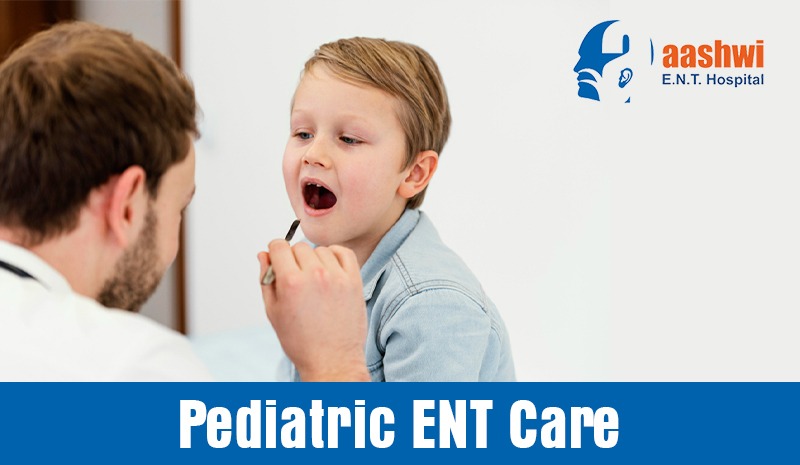
The examination is adapted to the child’s age and cooperation level. Younger children are assessed with the parent present using shorter instruments and age-appropriate techniques. Flexible nasal endoscopy in older children gives a complete view of the nasal passage and adenoids without general anaesthesia.
Ahmedabad’s Air Is Not Changing Fast Enough — Your Child’s Care Can
The city’s pollution levels will not drop to safe levels quickly. What parents can control is how well-protected their child is, and how early ENT problems are caught and addressed.
Dr Manish Goyal offers comprehensive pediatric ENT care in Ahmedabad — from routine evaluations to management of chronic sinusitis, recurrent ear infections, and adenoid issues linked to pollution exposure. If your child’s symptoms have been recurring without a clear answer, this is where that answer comes from.
Book your child’s consultation today.
📍 Dr Manish Goyal, ENT Specialist, Ahmedabad, Gujarat
For more information, click below:

No Comments