 +919979891672




Ear discomfort, unfortunately, affects the daily routine of a child through their sleep, appetite, and activities. When symptoms appear suddenly, parents are mostly anxious. Knowing what typically causes ear pain in children instills in parents the courage to act swiftly and unhesitatingly. Many instances are often due to infections, allergies, pressure, or even simple blockages. Some reasons may look safe, but at the same time, they could be concealing deeper issues. Getting a hold of this situation early enough will prevent the child from having long-term complications, and it will also safeguard their hearing. This manual highlights the major causes of frequent earaches in children, the signs that parents should recognize, and the appropriate time to see a doctor. Additionally, you will learn how pediatricians diagnose ear problems in children and the kind of medicine that provides a cure. By having clear facts, you will be able to help your child at the very beginning of the discomfort and also maintain his/her health.
Ear Pain in Children
Ear pain ranks high among health complaints. Since their ears are not yet fully mature, problems occur more frequently. Most problems originate from the mild side of the spectrum but grow over time if left unattended. By understanding the main reasons, parents will be able to intervene promptly and ensure their child’s well-being and hearing protection.
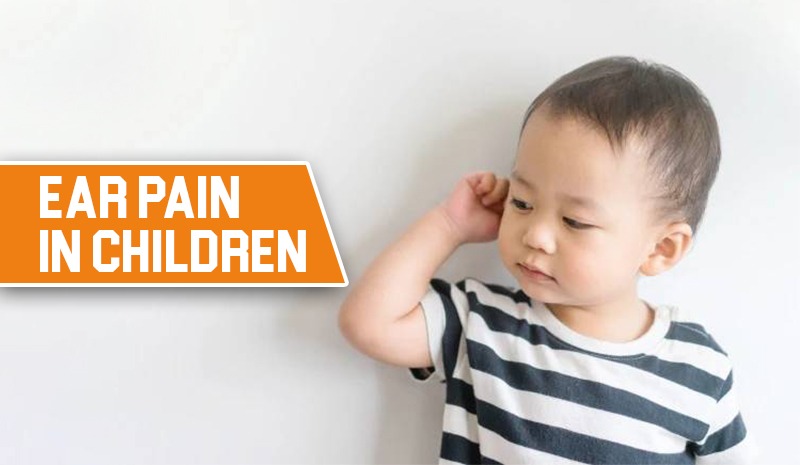
What causes frequent ear pain in children?
Children may experience ear pain due to various reasons. Those ten causes that are the most common are listed below:
1. Middle Ear Infection
Inflammation of the middle ear is the consequence of the fluid that collects in the space behind the eardrum. Either bacteria or viruses may cause the infection. Pain intensifies when the pressure inside the ear becomes too high.
2. Earwax Blockage
In some children, excessive production of earwax occurs. When wax becomes hard, it muffles the sound and can irritate the ear. Children can pull or scratch their own ears.
3. Swimmer’sEar
Swimmer’s ear is a condition that affects the outer ear canal only. Getting water in the ear is followed by bacterial development and, thus, infection. The outer ear may be extremely painful when touched.
4. Allergies
Allergies result in swelling of the nose and throat. The inflated Eustachian tube is blocked due to the swelling. As pressure accumulates, it eventually results in ear pain.
5. Sinus Infection
Sinus infections cause pressure on the face. Such pressure is then transferred to the ears. Children may say that their ears are full and painful.
6. Cold or Viral Illness
Even a trivial cold is enough to cause the Eustachian tube to be irritated. The fluid may be accumulated in the space behind the eardrum. The ear becomes painful until the illness passes.
7. Teething Pain
Teething is a source of sharp pain that may be referred to the ears. Babies may cry or rub their ears.
8. Foreign Objects
Children are greatly inclined to put small things into the ear canal. These things cause the area to become irritated, and suddenly the kids feel sharp pain.
9. Pressure Changes
Ear-pressure changes are among the results of flights, high altitudes, and rapid upward movements. Kids find it hard to adjust the pressure in their ears, and they feel pain.
10. Throat Infection
Most of the time, throat infection pain that is accompanied by earaches is the first one to spread to the ears. The reason for this is that the same nerves in the throat and ears are connected.
Those causes may be from the simplest to the gravest. Early detection, therefore, is a way of sparing long-term consequences.
How do I know if my child has an ear infection?
Ear infections lead to a lot of straightforward symptoms. Check for:
- Fever
- Irritability or crying
- Ear pulling or rubbing
- Trouble sleeping
- Fluid leaking from the ear
- Difficulty hearing
- Loss of appetite caused by painful swallowing
Infants can show only vague signs as they are not able to tell what is wrong with them. They might refuse feeding or become restless.
What symptoms help identify serious pediatric ear problems?
Some symptoms are a sign that the issue is even deeper. People should watch for:
- Intense or sudden pain
- Continuous fever
- Discharge that is green or bloody
- Dizziness
- Persistent vomiting
- An eardrum that looks swollen
- Hearing is impaired and lasts for more than a week
Such symptoms may be an indication of complications like long-term infection, eardrum damage, or fluid in the middle ear.
When should I take my child to an ENT for ear pain?
When signs of an infection or problem persist, it is essential to consult an ENT specialist. Please take the child to a doctor if:
- The pain has been going on for more than 48 hours
- The fever is constantly above 101°F
- Experiencing ear pain again and again
- Having problems with hearing
- The child is suffering from repeated ear infections
- After finishing a course of antibiotics, pain returns
- The symptoms become worse during sleep and also affect school performance
Infants and young children should be given priority and attended to rapidly. Their symptoms tend to develop very quickly; therefore, an early assessment will help in avoiding any complications.
How can I manage ear pain at home before a doctor visit?
Some simple home steps may help in giving temporary relief:
- Make sure the child is drinking enough water
- Put a warm compress on the ear
- Do not let the child lie down
- After consulting a doctor, you can give your little one some painkillers of an appropriate age
- Do not put objects or cotton swabs in your ear
- Try to avoid cold air
- Keep nasal passages clean by using saline drops
All these measures work to gradually relieve the pain, but they do not substitute a proper medical check-up. Always be sure that there are no home cleaning tools for the ear that you are using.
How do doctors diagnose ear pain in children?
Physicians have various approaches to identify the real cause:
Medical Examination
The physician visually inspects the otitis media with the help of a speculum in the ear canal. A swollen, red, or poorly drained area is usually obvious on examination with the otoscope.
Eardrum Mobility Tests
Tympanometry determines how the eardrum is influenced by a certain amount of pressure. This test is used to reveal that an infection may be causing fluid accumulation or that the middle ear is filled with fluid.
Hearing Evaluation
The hearing tests aim to find out if the patient’s hearing is impaired as a result of the ear pain. The tests for hearing are designed according to the age group of the children.
Nasal and Throat Examination
The doctors may discover sinus problems, allergies, or throat infections when examining the nose and throat. Most of these conditions that the doctors see there become the major causes of ear problems.
History Review
The parents inform the pediatrician about the character of symptoms, what causes them, duration, and the place /environment/ where the child has been before symptoms appeared. The more detailed the description is, the easier and faster the diagnosis is made.
Different combinations of tests and procedures unveil the complete picture.
What treatments are available to help with frequent ear pain in kids?
Therapy changes according to the etiological factor:
For Ear Infections
A physician can recommend the use of medications to alleviate the pain of infection and monitor its progress. However, in cases where symptoms become severe, doctors may prescribe drugs.
For Earwax Blockage
The staff removes wax using a method selected based on the equipment, ensuring it is both safe and effective.
For Swimmer’s Ear
The removal of fluid from the ear canal leads to the reduction of swelling, which usually goes along with the infection, and stops the infection by using ear drops.
For Allergies
Besides that, allergy control brings about a reduction of swelling, and a balancing of the ear pressure is resumed.
For Sinus Issues
By treating the illness, congestion can be reduced, and even the draining of the fluid can be facilitated.
For Teething
This is achieved by using a cold teething ring and through softly massaging the gums, which helps with referred pain.
For Foreign Objects
Before they cause injuries, doctors take them off in the safest way.
For Pressure Pain
At the same time, doing one of the activities, such as swallowing, chewing gum, or yawning, can help relieve the pressure that has built up in the ear.
Every treatment is centered on patient comfort and eventual health.

No Comments